The Story
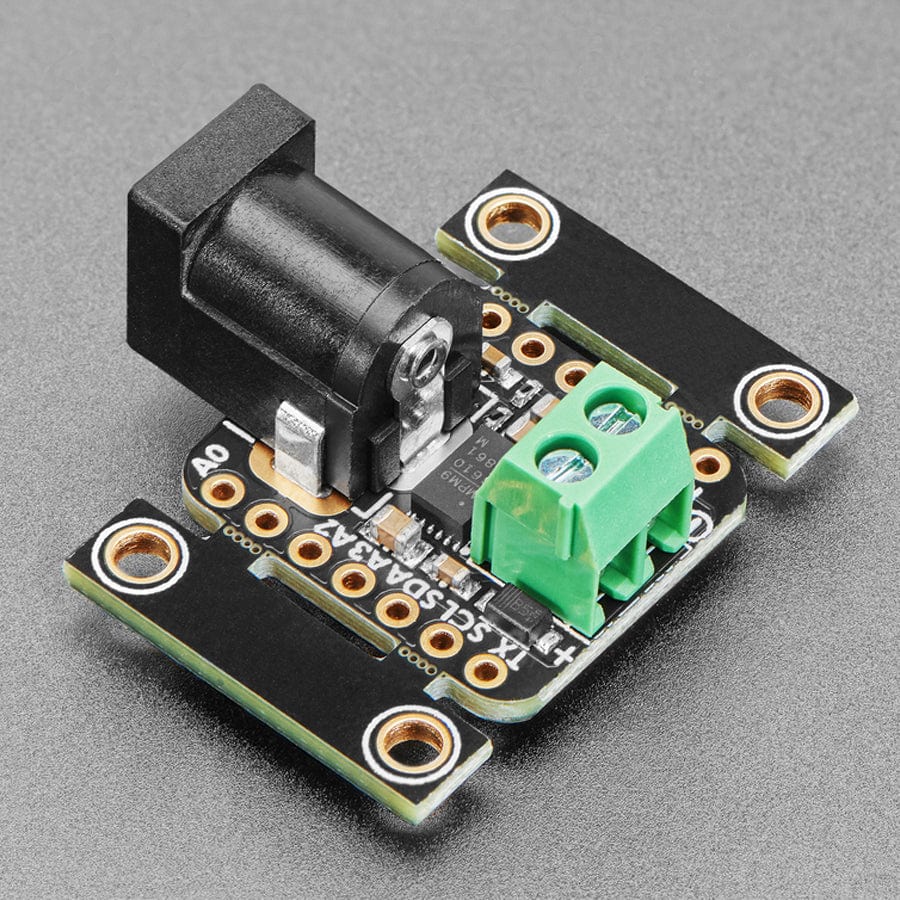
We were recently working on a project where we really wanted to power a QT Py ESP32 from 12V - but the only power input on the board is basically USB 5V max. Never one to give up, we designed an add-on that will allow anyone to use a QT Py or Xiao dev board with up to 20V DC power!
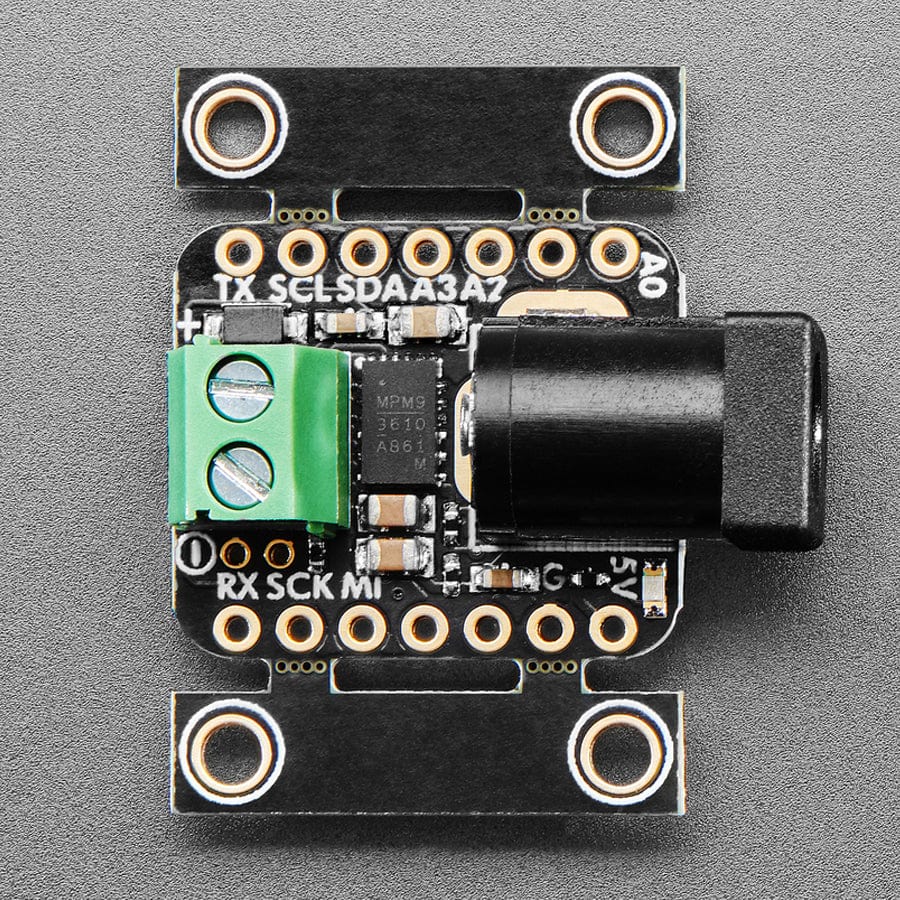
In the centre is an MPM3610 integrated buck converter, which will generate 5V from up to 20V input with cool DC/DC technology, so there's no heat sink needed. The MPM3610 can give about 1 Amp output, which should be plenty even if you have LEDs, WiFi connectivity, displays, or even a small motor or servo.
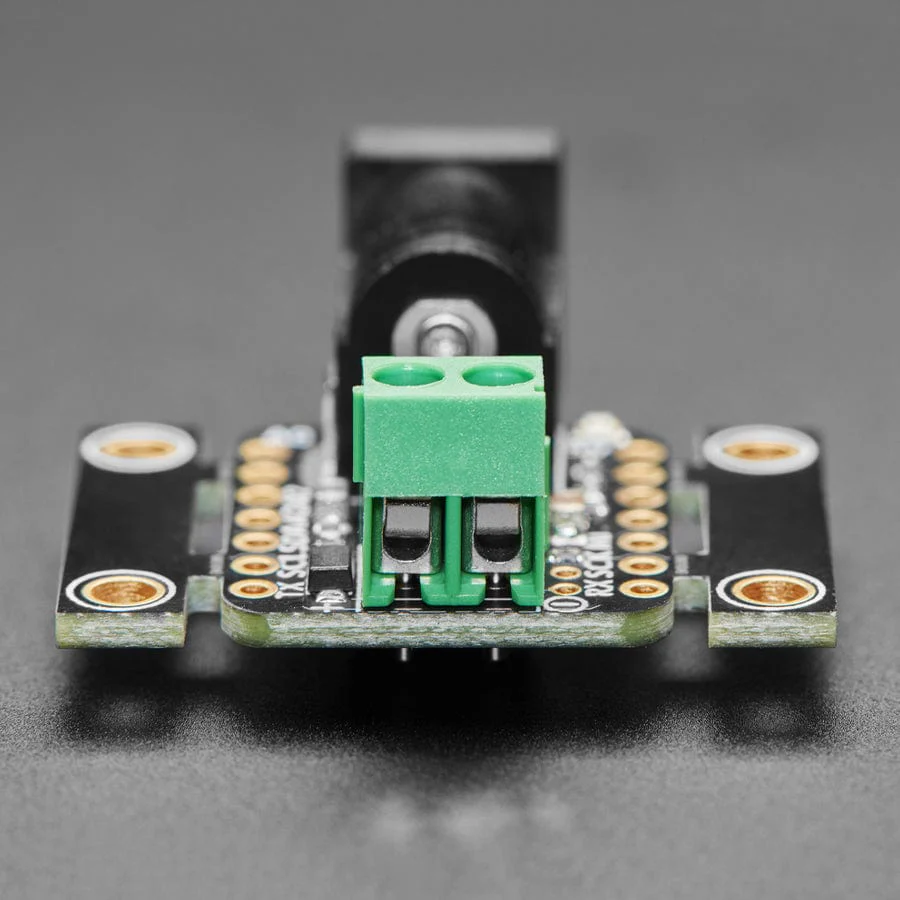
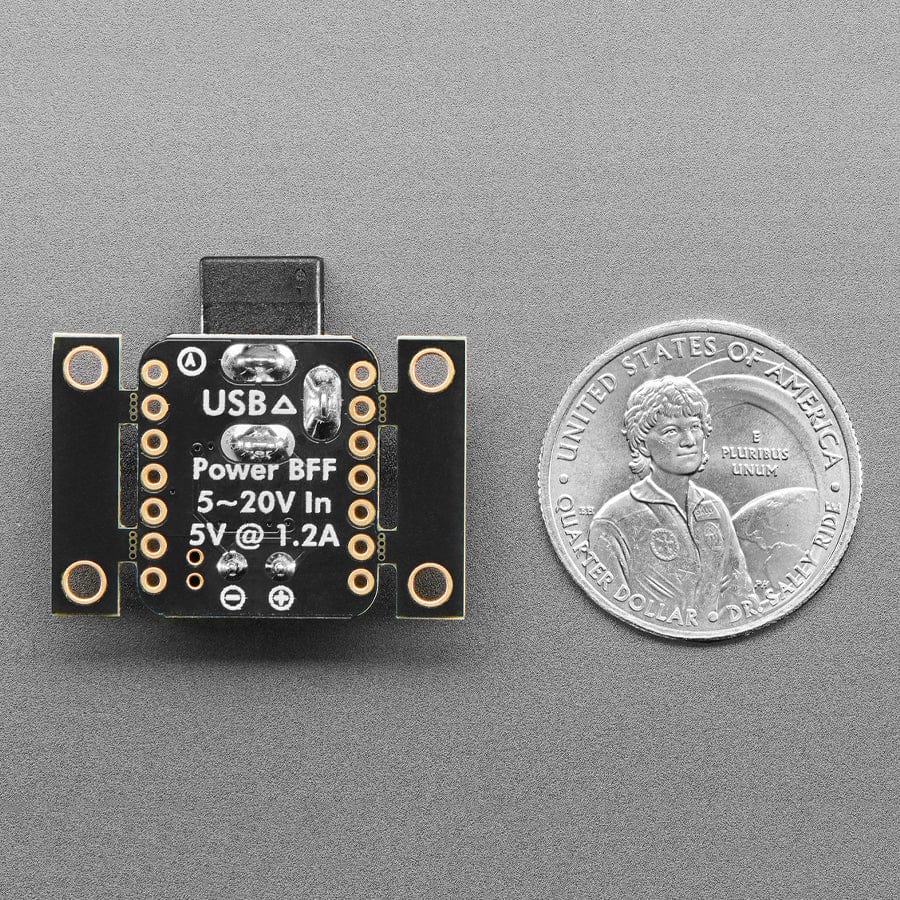
The board features a 3.5mm terminal block and 2.1mm DC jack inputs, protected with a Schottky diode. You can use either to power the board, but don't plug in different power inputs to both - they're wired directly together on the BFF. If you're using the DC jack to power, you can use the terminal block as a 'pass-through output' to connect other high-voltage devices.
There are two small enable and ground solderable pads next to the terminal block, so you can use an external switch to disable the converter.
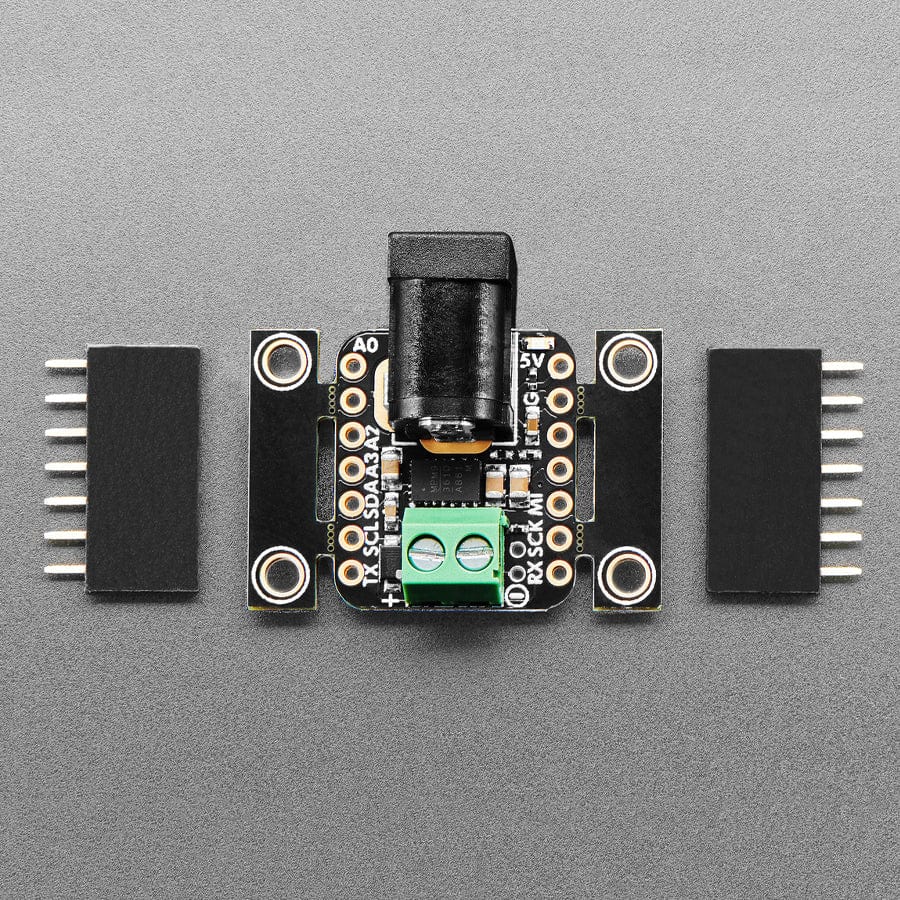
Since it's a bulky add-on with through-hole components, compared to most of our other BFF boards, we recommend using a socket header to plug a QT Py on top rather than trying to have it solder back-to-back. For that reason, we include two 7-pin socket headers. Solder them so that the QT Py sits on the top, there's two break-apart railings that can be used to bolt the board since plugging in a jack requires mechanical stabilisation.
Specifications
- Dimensions: 30.4mm x 26.6mm x 12.6mm
- Weight: 4.9g
Resources
- Primary Guide
Details & Craftsmanship
Every detail has been carefully considered to bring you the perfect product.
Details & Craftsmanship
Every detail has been carefully considered to bring you the perfect product.
Details & Craftsmanship
Every detail has been carefully considered to bring you the perfect product.
Details & Craftsmanship
Every detail has been carefully considered to bring you the perfect product.
Description
We were recently working on a project where we really wanted to power a QT Py ESP32 from 12V - but the only power input on the board is basically USB 5V max. Never one to give up, we designed an add-on that will allow anyone to use a QT Py or Xiao dev board with up to 20V DC power!
In the centre is an MPM3610 integrated buck converter, which will generate 5V from up to 20V input with cool DC/DC technology, so there's no heat sink needed. The MPM3610 can give about 1 Amp output, which should be plenty even if you have LEDs, WiFi connectivity, displays, or even a small motor or servo.
The board features a 3.5mm terminal block and 2.1mm DC jack inputs, protected with a Schottky diode. You can use either to power the board, but don't plug in different power inputs to both - they're wired directly together on the BFF. If you're using the DC jack to power, you can use the terminal block as a 'pass-through output' to connect other high-voltage devices.
There are two small enable and ground solderable pads next to the terminal block, so you can use an external switch to disable the converter.
Since it's a bulky add-on with through-hole components, compared to most of our other BFF boards, we recommend using a socket header to plug a QT Py on top rather than trying to have it solder back-to-back. For that reason, we include two 7-pin socket headers. Solder them so that the QT Py sits on the top, there's two break-apart railings that can be used to bolt the board since plugging in a jack requires mechanical stabilisation.
Specifications
- Dimensions: 30.4mm x 26.6mm x 12.6mm
- Weight: 4.9g
Resources
- Primary Guide