Original: $14.30
-70%$14.30
$4.29The Story
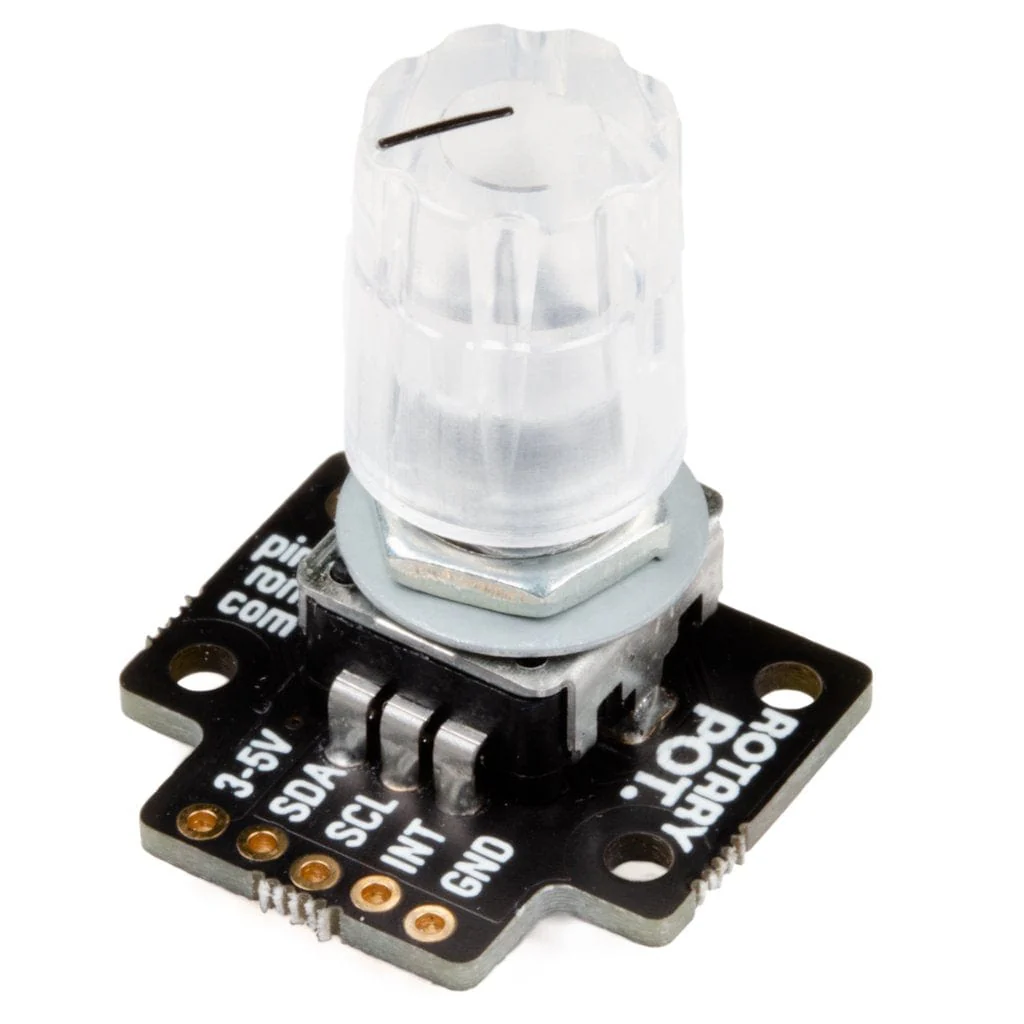
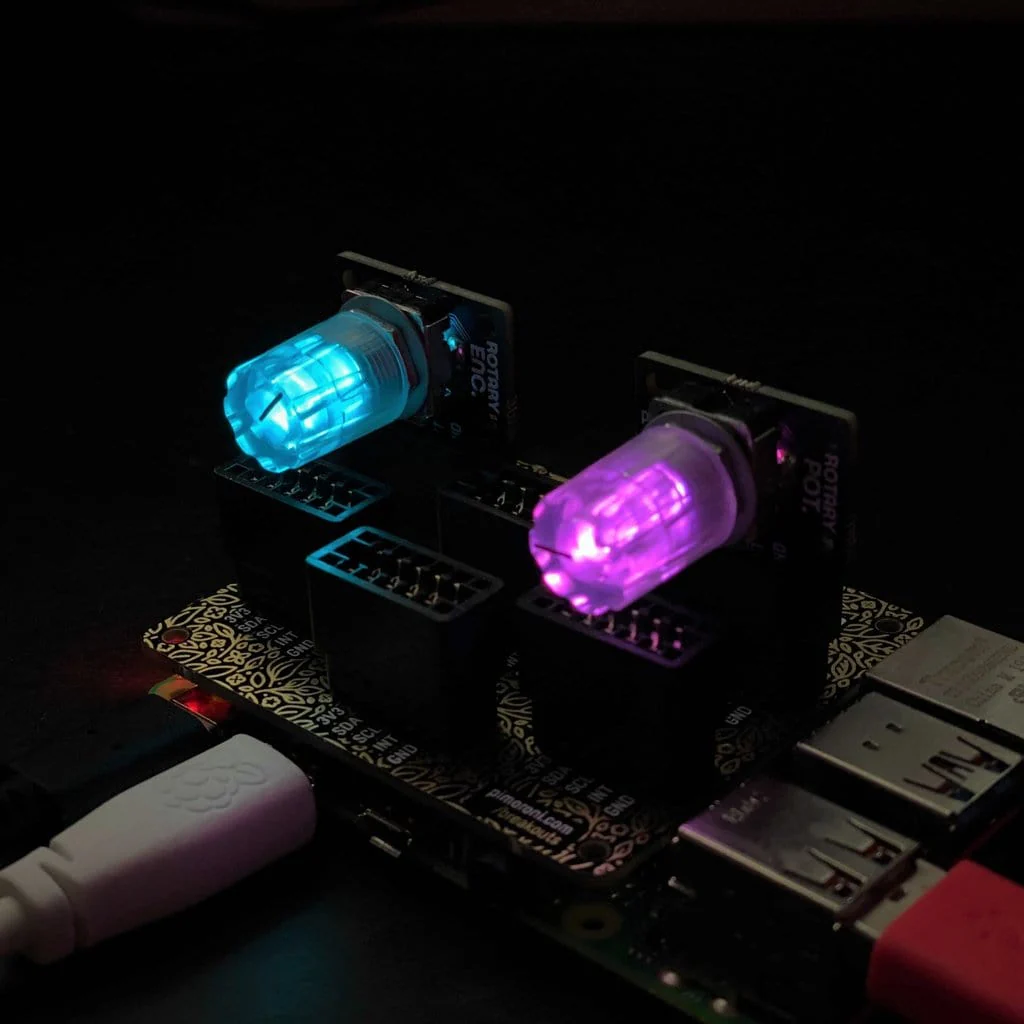
Add a colourful light-up dial and turn your Raspberry Pi project up to 11!
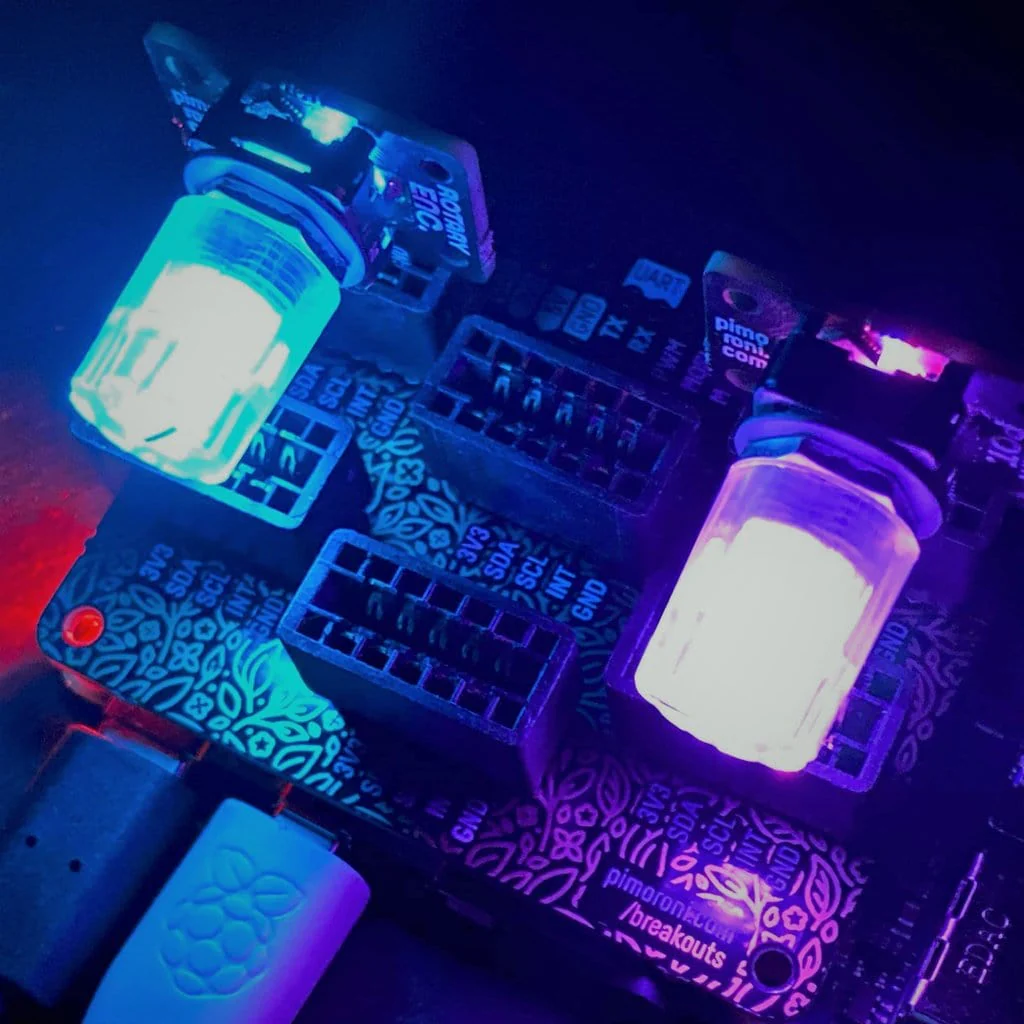
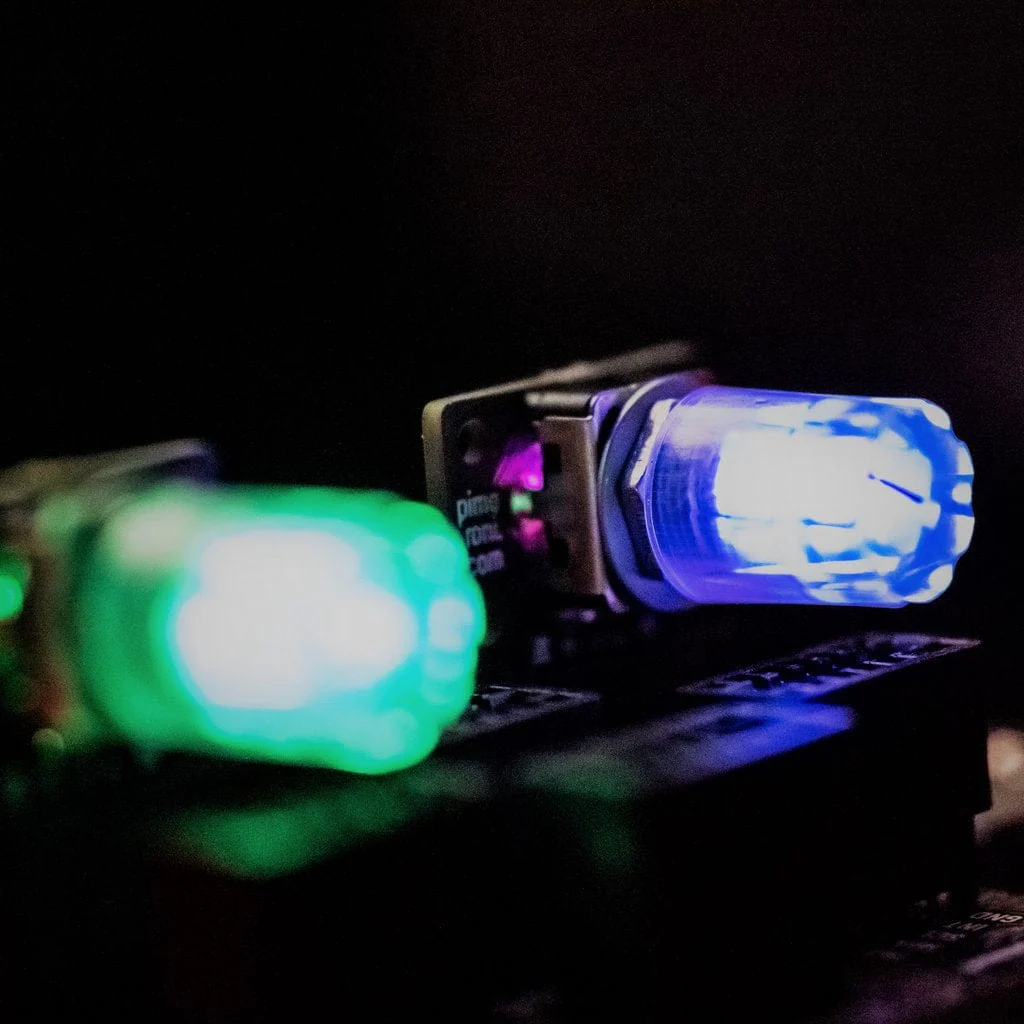
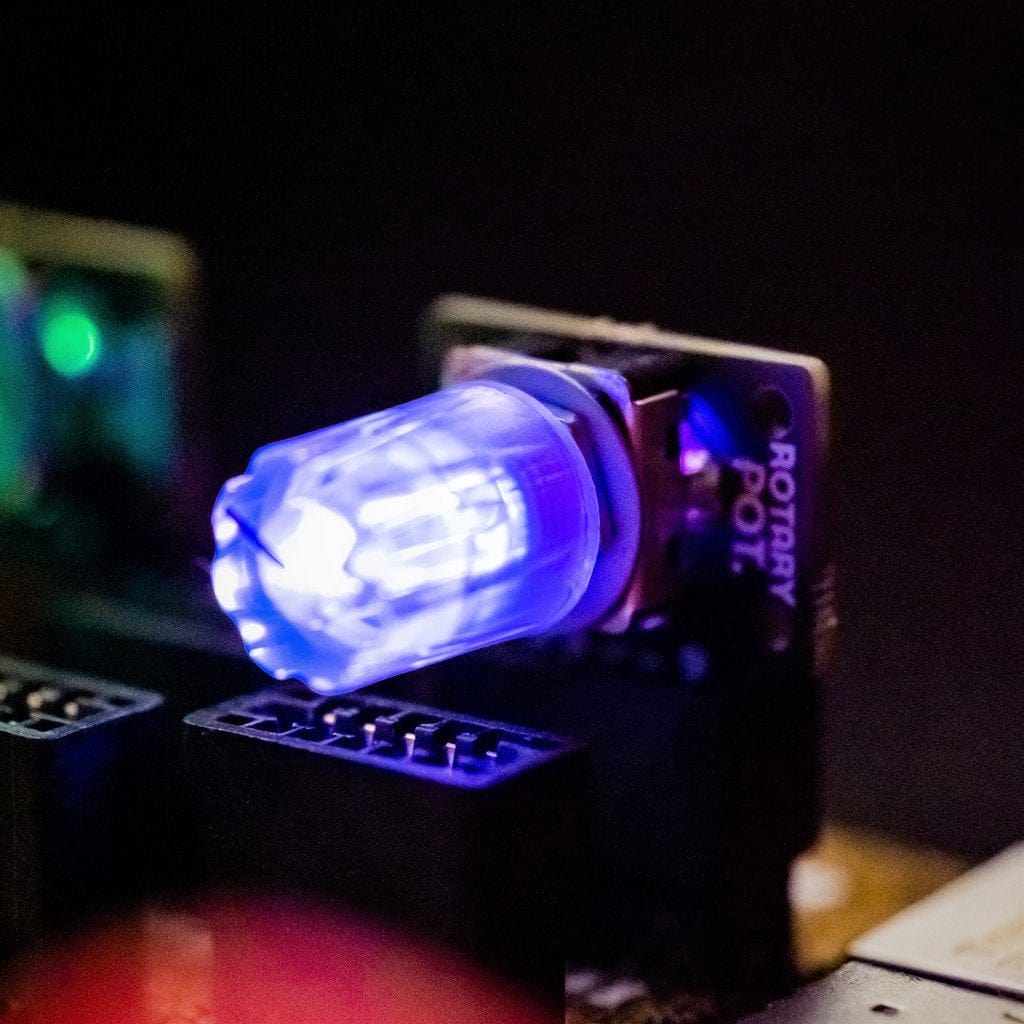
This I2C breakout uses its clever Nuvoton microcontroller to help you easily incorporate a digital linear potentiometer into your project. You can directly control the RGB LED inside the pot - meaning it's great for using as an input device which can also show you a colour coded visual status (like a thermostat, or volume control).
Check out our full range of Breakout's and Breakout Garden's here
Potentiometers have a limited range of motion and are good for dials that benefit from having a set start and end point - if you'd prefer one that can spin round continuously, we also stock an RGB Encoder Breakout!
You can attach it to your Pi's GPIO directly or via a breadboard with the included headers, but it's also compatible with our fancy solderless Breakout Garden, which makes it easy to use several different breakouts at the same time.
Features
- Nuvoton MS51 microcontroller with built-in 12-bit Analog to Digital Converter (datasheet / Technical Reference Manual)
- Linear potentiometer (datasheet / drawing)
- RGB LED (controllable by PWM)
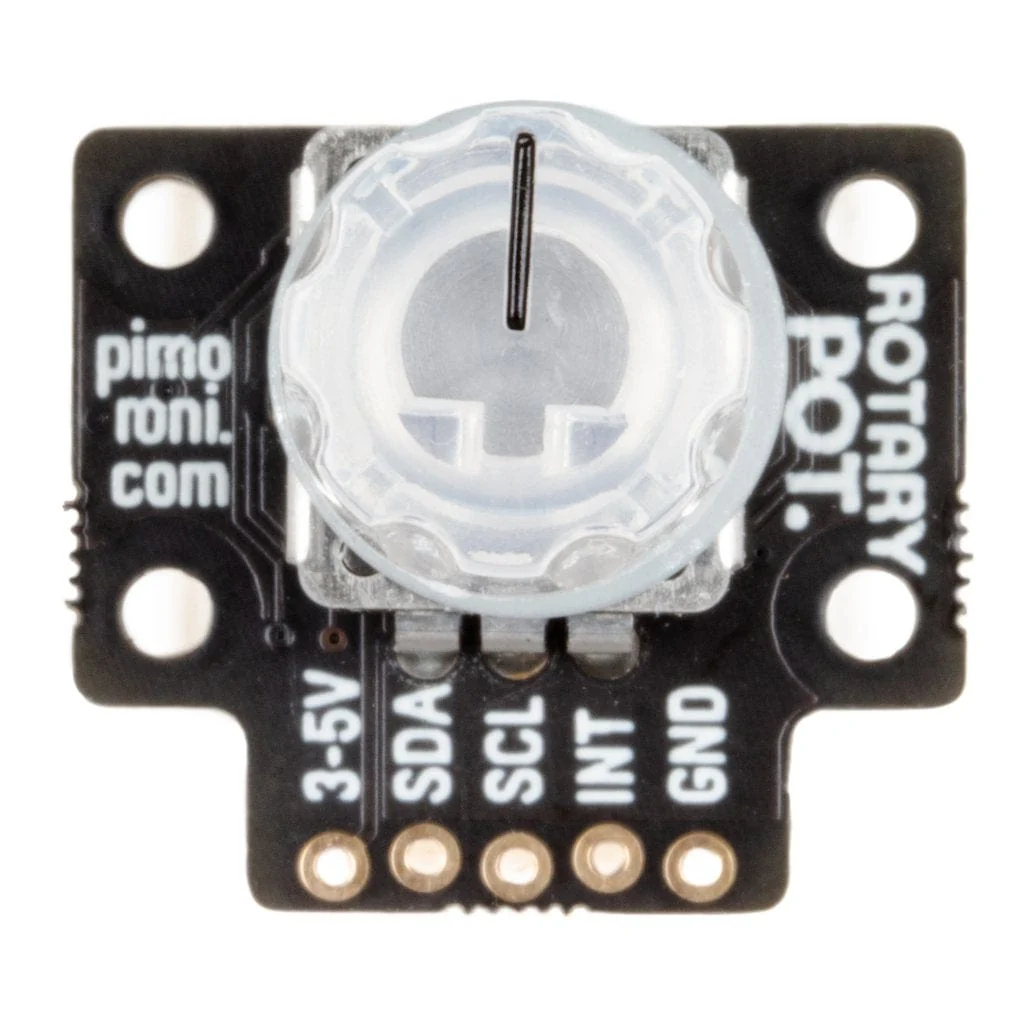
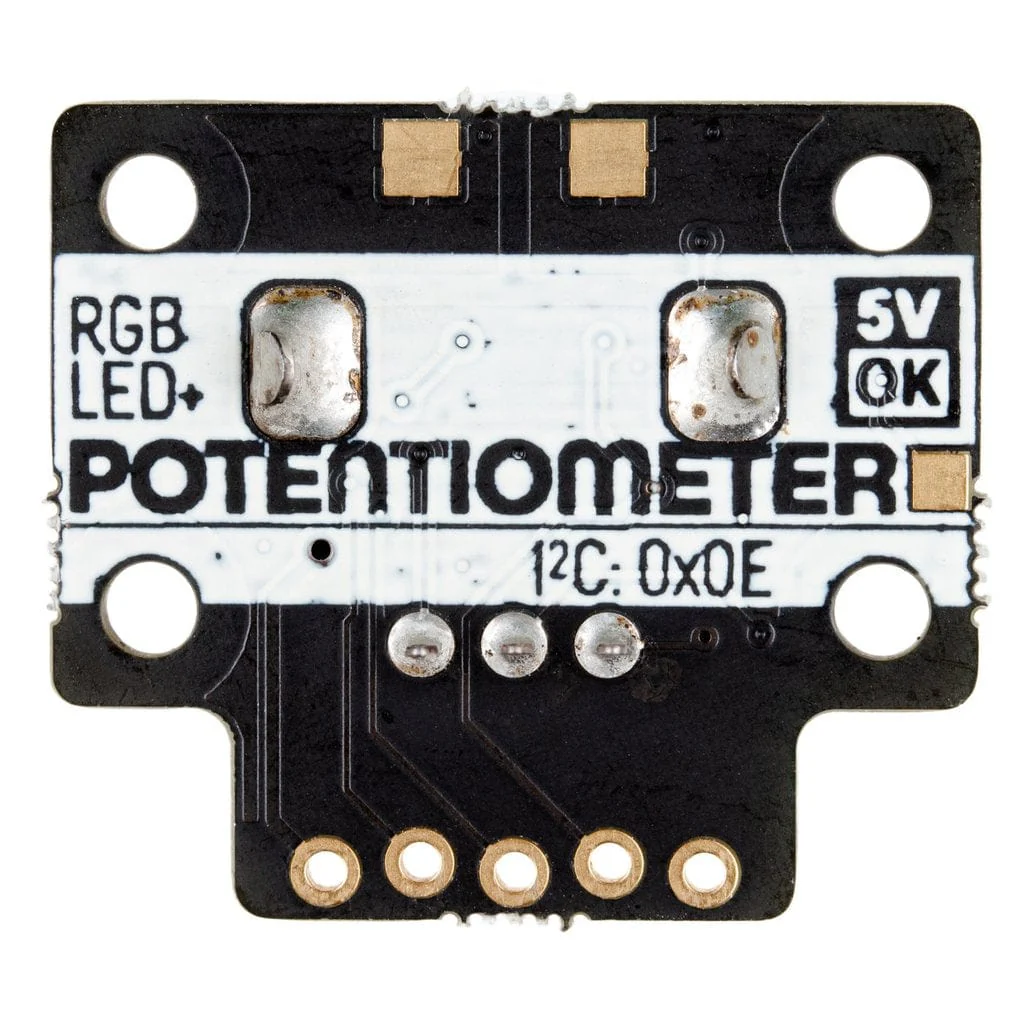
- I2C interface, with a default address of 0x0E
- 3V to 5V compatible
- Reverse polarity protection
- Raspberry Pi-compatible pinout (pins 1, 3, 5, 7, 9)
- Compatible with all models of Raspberry Pi.
- Python library
Kit includes
- RGB Potentiometer Breakout (pre-assembled)
- 1x5 straight male header
- 1x5 right angle female header
We've designed this breakout board so that you can solder on the piece of right angle female header and pop it straight onto the bottom left 5 pins on your Raspberry Pi's GPIO header (pins 1, 3, 5, 7, 9).
Software
RGB Potentiometer Breakout uses the same Python library as our IO Expander Breakout - this example shows you how to read the pot and control the LED.
Chris has kindly added support for the Potentiometer and Encoder breakouts to his Arduino port of our IO Expander library.
Notes
- The default I2C address is 0x0E, but it's possible to change this in software if you'd like to use multiple RGB Potentiometer Breakouts, or avoid conflicts with other I2C devices. The new address will be saved in flash memory, so will persist if unpowered.
- This board uses a Nuvoton MCU with our custom firmware but if you're brave and hackerly, you can substitute your own firmware to change the way this board works and have a super cheap and capable microcontroller (though this is not for the faint of heart!)
- Dimensions: approx 25x22x30mm (LxWxH)
Details & Craftsmanship
Every detail has been carefully considered to bring you the perfect product.
Details & Craftsmanship
Every detail has been carefully considered to bring you the perfect product.
Details & Craftsmanship
Every detail has been carefully considered to bring you the perfect product.
Details & Craftsmanship
Every detail has been carefully considered to bring you the perfect product.
Details & Craftsmanship
Every detail has been carefully considered to bring you the perfect product.
Details & Craftsmanship
Every detail has been carefully considered to bring you the perfect product.
Description
Add a colourful light-up dial and turn your Raspberry Pi project up to 11!
This I2C breakout uses its clever Nuvoton microcontroller to help you easily incorporate a digital linear potentiometer into your project. You can directly control the RGB LED inside the pot - meaning it's great for using as an input device which can also show you a colour coded visual status (like a thermostat, or volume control).
Check out our full range of Breakout's and Breakout Garden's here
Potentiometers have a limited range of motion and are good for dials that benefit from having a set start and end point - if you'd prefer one that can spin round continuously, we also stock an RGB Encoder Breakout!
You can attach it to your Pi's GPIO directly or via a breadboard with the included headers, but it's also compatible with our fancy solderless Breakout Garden, which makes it easy to use several different breakouts at the same time.
Features
- Nuvoton MS51 microcontroller with built-in 12-bit Analog to Digital Converter (datasheet / Technical Reference Manual)
- Linear potentiometer (datasheet / drawing)
- RGB LED (controllable by PWM)
- I2C interface, with a default address of 0x0E
- 3V to 5V compatible
- Reverse polarity protection
- Raspberry Pi-compatible pinout (pins 1, 3, 5, 7, 9)
- Compatible with all models of Raspberry Pi.
- Python library
Kit includes
- RGB Potentiometer Breakout (pre-assembled)
- 1x5 straight male header
- 1x5 right angle female header
We've designed this breakout board so that you can solder on the piece of right angle female header and pop it straight onto the bottom left 5 pins on your Raspberry Pi's GPIO header (pins 1, 3, 5, 7, 9).
Software
RGB Potentiometer Breakout uses the same Python library as our IO Expander Breakout - this example shows you how to read the pot and control the LED.
Chris has kindly added support for the Potentiometer and Encoder breakouts to his Arduino port of our IO Expander library.
Notes
- The default I2C address is 0x0E, but it's possible to change this in software if you'd like to use multiple RGB Potentiometer Breakouts, or avoid conflicts with other I2C devices. The new address will be saved in flash memory, so will persist if unpowered.
- This board uses a Nuvoton MCU with our custom firmware but if you're brave and hackerly, you can substitute your own firmware to change the way this board works and have a super cheap and capable microcontroller (though this is not for the faint of heart!)
- Dimensions: approx 25x22x30mm (LxWxH)